AXIS SENTINEL EVIDENCECore system
Ledger. Trace. Pulse.
EVERY MATERIAL EVENT LEAVES A RECORD THAT CAN BE RECONSTRUCTED.
Evidence is Sentinel's institutional record. The Ledger holds durable history, Trace reconstructs the causal sequence, and Pulse states current operational state derived from the record. Raw evidence is preserved apart from its searchable index, with its digest and provenance.

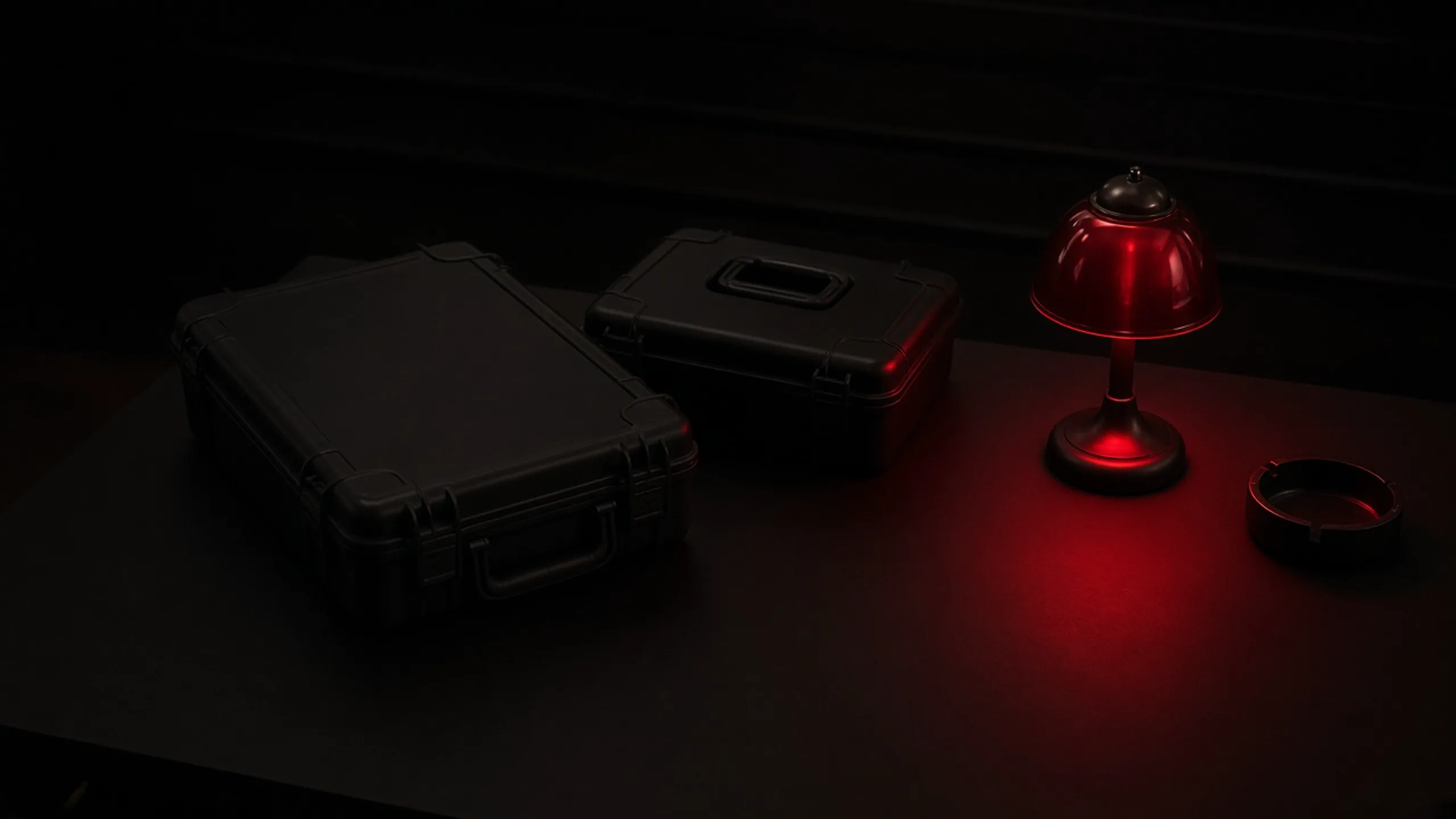
Illustrative render. Evidence (Ledger, Trace and Pulse) is built. Evidence Vault is a separate store and is not enabled. Evidence storage is not enabled in this deployment, so the vault here is a picture of that idea, not a live store.
- 01ObserveContinuous telemetry from every service and edge you connect.
- 02VerifyTelemetry checked at the gateway before it is trusted.
- 03DetectAnomaly, policy violation, and absent signal alike.
- 04ProtectPolicy enforced at the identity and tenant boundary.
- 05PreserveEvidence written down before it can be lost. (Evidence operates here)
- 06RecoverContinuity coordinated, state restored, result verified.
Recover returns to Observe
Evidence writes the record down before it can be lost.
Three records
Three questions, kept apart.
History is not state, and a causal link is not a log line. The Ledger, Trace and Pulse answer different questions and are never merged into one.
Ledger
What happened
Plates in strict sequence. Each entry commits to the one before it; the next is added at the head.

Trace
How it happened
A thread through the records that led from one event to the next. The dashed branch was inferred, and says so.

Pulse
What is true now
Derived from the record and held at the head of it. It says what is true at this moment, not how it came about.


Three cameras in one hall. Illustrative renders.
Chain of custody
From signal to record.
Choose an event and follow it down the vault. Everything upstream of the gateway is a claim; everything downstream is a record. An incident is rebuilt from the last three layers read back, Pulse first, then Trace, then the Ledger in order, then the preserved object checked against its digest, as on the Guard page.
Event chosen: Session revoked at the boundary. The demonstration restarts at the first layer.
Illustrative demonstration
One event, becoming a record
EventSession revoked at the boundary
- TelemetryA claim, not yet a record (sealed)
- Verified ingestionWho spoke, and how it is known (sealed)
- Searchable indexWhere the moment is found (sealed)
- Preserved raw objectThe original, kept apart (sealed)
- Hash and provenanceA digest and a lineage (sealed)
- LedgerWhat happened (sealed)
- TraceHow it happened (sealed)
- PulseWhat is true now
After: Telemetry
A claim- Source
- A privileged session
- Presented as
- An observation
- How it is known
- Named on the record.
Illustrative values. Digests and positions here are not measurements.
After: Verified ingestion
Admitted- Registration
- Identifies, authorizes nothing
- Origin
- Registered and proven
- Already seen
- Not a new report
- Budget
- Within its allowance
- Known as
- Server observed
Illustrative values. Digests and positions here are not measurements.
After: Searchable index
Indexed- Store
- Event index
- Holds
- Metadata and a pointer
- Triage
- Open
Illustrative values. Digests and positions here are not measurements.
After: Preserved raw object
Stored- Store
- Object storage
- Key
- tenants/‹tenant›/evidence/‹id›
- Type
- Guard decision
- Row
- Pending, then stored
- Storage
- Verified per deployment
Illustrative values. Digests and positions here are not measurements.
After: Hash and provenance
Unverified- Digest
- A SHA-256 digest is recorded
- Provenance
- Tenant, source, attestation, capture time
- Integrity
- Not yet re-read
Illustrative values. Digests and positions here are not measurements.
After: Ledger
Appended- Action
- Session revoked
- Actor
- Operator
- Previous
- ••••
- Entry
- ••••
Illustrative values. Digests and positions here are not measurements.
After: Trace
Linked- Observation to event
- Observed as · server attested
- Event to decision
- Decided by · operator entered
- Decision to object
- Evidenced by · server attested
- Object to entry
- Recorded in · server attested
Illustrative values. Digests and positions here are not measurements.
After: Pulse
Derived- Session
- Revoked
- Evidence
- An object, unverified
- Audit
- Complete
- Operational state
- Observing
Illustrative values. Digests and positions here are not measurements.
Step 8 of 8
Pulse
Pulse derives what is true now from the record: the session is revoked, one object is stored and not yet re-read, and the audit is complete. This is what is true now.
A privileged session acts outside its usual pattern. At this moment it is only an observation: something a source says, not yet a record.
Sentinel decides who is speaking from the estate on file, not from what the report claims about itself, and names how the record is known. This one Sentinel observed itself.
The event is indexed so an investigator can find this moment without replaying an estate's history. The index holds metadata and a pointer. Bulk content never enters it.
The original bytes are written, unmodified, to object storage, apart from the index. The row says pending until the object is confirmed, and only then stored. Where storage is not verified, this step is refused rather than faked.
A SHA-256 digest is taken over the exact bytes and recorded with their provenance. The object starts unverified: stored, but not yet re-read. A later re-read compares the bytes with this digest.
An operator revokes the session. The action is appended to the tenant's hash-chained Ledger, and the entry commits to the one before it. This is what happened.
Trace links the observation to the event, the decision, the evidence object and the Ledger entry. Every link records how it is known, so an inferred link is never read as an observed one. This is how it happened.
Pulse derives what is true now from the record: the session is revoked, one object is stored and not yet re-read, and the audit is complete. This is what is true now.
Simulated states, written to show how the system behaves. Nothing here reads or changes a live system.

Integrity
What the record can prove, and where it stops.
Each Ledger entry commits to the one before it, so a silent edit to a single entry can be found by re-walking the chain. Try three changes and see what the re-walk reports. The last is the limit, and it is stated.
Illustrative demonstration
Entry 1
Incident declared
Intact- Commits to
- ••••
- Stored hash
- ••••
Entry 2
Session revoked
Intact- Commits to
- ••••
- Stored hash
- ••••
Entry 3
Decision snapshot preserved
Intact- Commits to
- ••••
- Stored hash
- ••••
Entry 4
Incident marked contained
Intact- Commits to
- ••••
- Stored hash
- ••••
Re-walk result: every entry commits to the one before it. The chain is intact.
A matching digest shows
- The stored bytes are, byte for byte, the bytes whose digest was recorded at capture.
- The object has not been silently altered or truncated since capture.
It does not show
- Who created the content.
- That the observation was truthful, or that the event it describes occurred.
- That the digest recorded at capture described what the observer meant to capture.
- That the Ledger chain has not been rewritten by someone who can write to the database.
Sentinel preserves evidence and makes its integrity checkable. It does not assert legal admissibility or certify compliance with any regime: that assessment belongs to counsel and auditors.

The vault door
Evidence storage is verified per deployment.
Evidence on this page is the built record: Ledger, Trace and Pulse. Evidence Vault, the gated object store, is a separate capability and is off. A connected store is configuration, not proof. Sentinel proves storage from both sides before it describes it as available, and a service without verified storage refuses evidence rather than record objects it has not stored.
Illustrative demonstration
- Not establishedA store is connected for this service
- Not establishedA check is written, read back, and matches
- Not establishedThe scheduled check reads the same object from the same store
No store is connected for this service.
Refusing evidence: no store is connected. There is no fallback to local storage.
These are the states Sentinel can report for a deployment. This page does not report the state of any deployment.
Signal path
What enters it, and what leaves.
Signals in
- Records admitted by First Light and server-observed events
- Guard decisions and operator actions
- Raw evidence objects and their digests
- Preservation confirmations and Shield records
Evidence
PRESERVE
Outputs
- Ledger: what happened
- Trace: how it happened
- Pulse: what is true now
- Integrity state per object: verified, unverified, mismatched or missing
Ten questions
Evidence, answered.
The questions every Sentinel system must answer, in the same order on every system page.
Evidence is Sentinel's record: the Ledger holds what happened, Trace reconstructs how it happened, and Pulse states what is true now, derived from the record.
The record and whether it is still intact.
- Control actions appended to the Ledger
- The causal links between events
- Raw evidence objects and their digests
- Retention and legal hold
Records First Light admits, Guard's decisions, Watchtower's transitions, preservation outcomes from Continuity, and Shield records.
Whether each object is stored, verified, unverified, mismatched or missing; whether an audit intent has reached the Ledger; and whether this deployment can accept evidence at all.
Append control actions to a per-tenant hash chain, so a silent edit to one entry becomes detectable; keep raw objects apart from their searchable index; re-verify digests; assemble an incident's trace; and hold objects under legal hold.
It does not assert legal admissibility or certify compliance with any regime. That assessment belongs to counsel and auditors.
- The hash chain makes single-row tampering detectable; it has no external anchoring and is not described as immutable.
- Evidence object storage is verified per deployment, and a deployment without it refuses evidence.
The state of the record in counts and named states: stored, unverified, verified, mismatched, missing and pending objects; audit completeness; and whether evidence is being accepted.
- Chained Ledger entries and older append-oriented rows are reported apart, never as one total.
Every other system writes into Evidence: First Light's records, Guard's decisions, Watchtower's transitions, Continuity's preservation outcomes and Shield's records. Command reads Pulse and Trace from it.
Evidence fails closed and says so. Without verified storage Command shows that evidence is being refused; there is no fallback to local storage, and an audit write that fails is shown as failed, not pending.
Digests are re-read and compared, the record chain is re-walked, and storage is proven by writing an object from one deployment and reading it back.
- An integrity mismatch is counted on its own, never averaged into a percentage.
Relations
Where it connects.
- First Light Receives fromAdmitted records and server-observed events
- Guard Receives fromEvery decision, written with the change
- Continuity Receives fromPreservation outcomes, recorded to the Ledger
- Shield Receives fromShield records preserved as evidence objects
- Range Receives fromLedger and evidence failure scenarios
- Command Sends toPulse, Trace, and the integrity of the record
- Object storage Exchanges with, outside SentinelRaw objects written and re-read; verified per deployment
- Sends to
- Receives from
- Exchanges with
- Outside Sentinel
Failure and health
When it fails, it says so.
In operation
Verified
- Objects stored apart from their index
- Digests re-read and compared
When it fails or loses visibility
Refusing evidence
- No verified storage: evidence refused, not faked
- No fallback to local storage
- A failed audit write shown as failed
Evidence states
- Verified (lit: in operation)Stored, re-read and matched to its digest.
- UnverifiedStored, not yet re-read. Not a failure, not a confirmation.
- Integrity mismatchThe bytes no longer match the recorded digest.
- MissingRecorded, but the object is not where it should be.
- Refusing evidence (lit: on failure)No verified storage. Evidence is refused, not faked.
How its own health is verified
- Storage proven from both sides with a probe object
- Ledger chain re-walked
- Mismatches counted, never averaged away
The Sentinel system family
Ten systems, one institution.
Put Sentinel on guard
Choose the protection level built for where your company is today.
